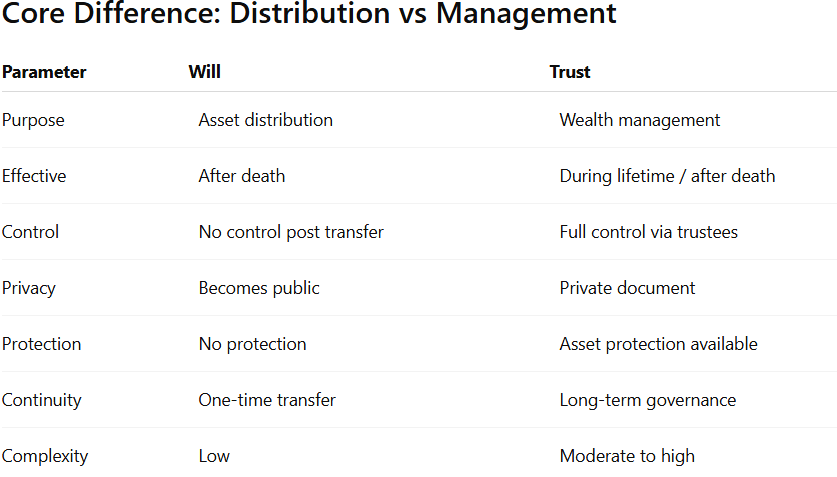
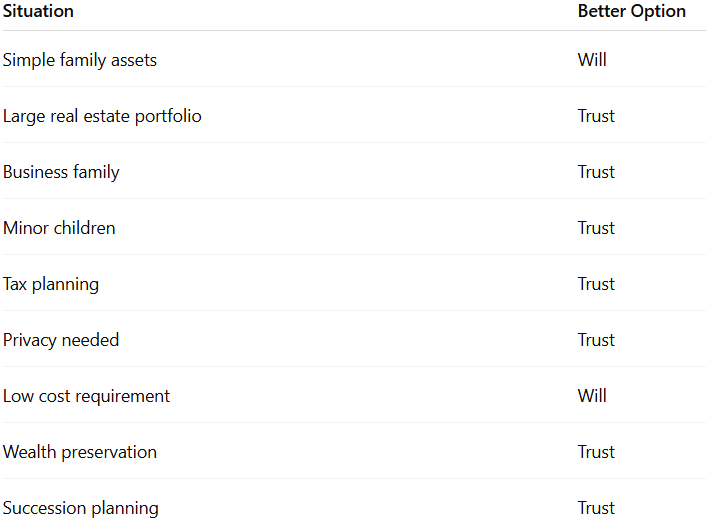
Deciding how to pass on your hard-earned wealth is one of the most important financial decisions you’ll make. While many assume a simple Will is enough, the reality of modern wealth management often requires the more robust structure of a Trust. The core difference is simple: A Will distributes wealth, but a Trust governs it.
Understanding the Basics:
What is a Will?
A Will is a legal document that specifies how a person's assets should be distributed after death. It comes into effect only upon the demise of the testator (an individual making the Will) and is executed by the executor/s named in the Will.
Key Features
- Effective only after death of testator
-
Simple and low-cost
- Direct transfer to beneficiaries
- Requires probate in certain jurisdictions
- No control after distribution
A Will is suitable where assets are simple, family ties are cohesive and the intention is straightforward distribution.
What is a Trust?
A Trust is a legal arrangement where assets are transferred to trustees who are in charge of trust assets and its management, who manage them for the benefit of beneficiaries, as per defined conditions of the Trust Deed. A trust can operate during lifetime of testator and continue after his death.
Key Features
- Can operate during lifetime
- Separates ownership from control
- Enables conditional distribution
- Protects assets from misuse
- Ensures long-term wealth governance
- Testator can be trustees as well
- A separate tax entity other than testator. trustees and beneficiaries
A Trust is a wealth management and protection structure, not just a distribution mechanism.